
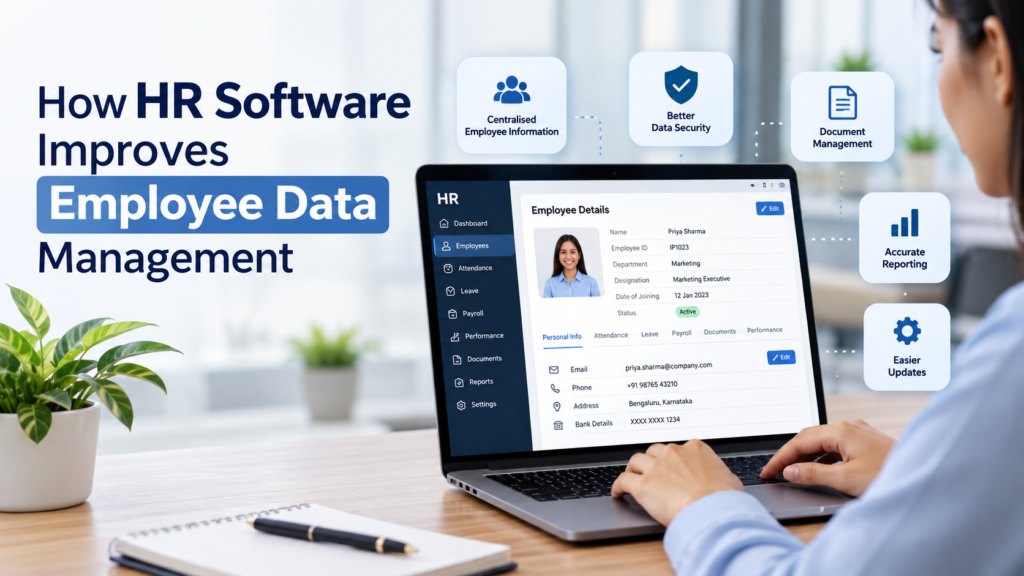
Employee data is one of the most important resources in any organisation. From basic personal details and contact information to attendance records, salary information, leave history, performance details, and employment documents, HR teams handle a large amount of information every day. Managing all this data manually can become difficult as a business grows.
Traditional methods such as spreadsheets, paper files, emails, and separate systems may create duplicate records, outdated information, data-entry mistakes, and delays in accessing important employee details. HR software provides a more organised way to collect, store, update, and manage employee information from a central system.
For businesses looking to improve HR operations, iProfit offers an approach where employee data management can become more structured, accessible, and efficient. Here is how HR software can improve the way organisations manage employee information.
1. Centralises Employee Information
One of the biggest advantages of HR software is that it brings employee information into one central system. Instead of keeping records across spreadsheets, physical files, emails, and different folders, HR teams can manage important information from a single platform.
An employee profile can contain information such as:
- Employee name and contact details
- Department and job title
- Date of joining
- Employee ID
- Attendance records
- Leave history
- Salary and payroll information
- Bank details
- Documents and certificates
- Performance information
- Employment status
A centralised system makes it easier for authorised HR staff to find the information they need without checking multiple sources.
2. Reduces Manual Data Entry
Manual data entry can take significant time, particularly when HR teams manage a large workforce. Entering the same employee information into multiple spreadsheets or systems can also increase the chance of mistakes.
HR software can reduce repetitive data-entry work by keeping employee information in a structured digital profile. When information needs to be updated, HR teams can make the change in the appropriate record rather than updating several separate documents.
For example, if an employee changes their address, the HR team can update the employee profile directly. This helps maintain a more consistent employee record and reduces unnecessary administrative work.
3. Improves Data Accuracy
Accurate employee information is important for HR operations, payroll processing, attendance management, reporting, and internal communication. Even a small data-entry mistake can create problems later.
HR software can help improve accuracy by using standardised fields, required information, validation rules, and structured employee profiles. These features can reduce common errors such as incomplete records, inconsistent formats, and duplicate entries.
Better data accuracy also gives HR teams greater confidence when preparing reports or making decisions based on employee information.
4. Makes Employee Records Easier to Update
Employee information changes throughout the employment lifecycle. Employees may change their address, phone number, department, job role, salary, reporting manager, or employment status.
Managing these changes manually can be time-consuming. HR software provides a structured way to update employee information as changes occur.
Depending on the system and access settings, employees may also be able to update certain personal information themselves. HR teams can then review or approve changes where required.
This helps keep employee records current and reduces the need for HR staff to make every minor update manually.
5. Provides Faster Access to Employee Information
Searching through physical files or multiple spreadsheets can take time. HR software makes employee information easier to access through digital employee profiles and search functionality.
For example, an HR manager may need to check an employee’s joining date, department, leave balance, or employment information. Instead of searching through different documents, the required information can be accessed from the employee’s central profile.
Faster access to information can help HR teams respond to employee queries more efficiently and spend more time on strategic HR activities.
6. Helps Organise Employee Documents
Employee records often include important documents such as identity information, offer letters, employment agreements, certificates, appraisal documents, and other HR-related files.
Keeping these documents in physical folders can make storage and retrieval difficult. Digital HR software can help organisations organise employee documents alongside employee profiles.
This can make it easier to locate documents when they are required. It can also reduce dependence on physical paperwork and help organisations maintain a more organised digital HR environment.
Businesses should still establish appropriate document retention policies and access controls to ensure employee documents are handled responsibly.
7. Supports Better Data Security
Employee data can contain sensitive personal and employment information. Protecting this information should therefore be an important consideration for every organisation.
HR software can provide security features such as user permissions, role-based access, authentication controls, activity logs, and controlled access to specific types of information.
For example, an employee may be allowed to view their own personal information, while authorised HR or payroll personnel may have access to additional information required for their responsibilities.
The exact security capabilities vary between HR software platforms, so businesses should evaluate security features carefully before selecting a solution.
8. Reduces Duplicate Employee Records
Duplicate records can create confusion and affect the accuracy of HR reports. They may occur when employee information is entered into multiple spreadsheets or systems without proper coordination.
A centralised HR system can help maintain one structured employee profile rather than multiple versions of the same record.
This makes employee data easier to manage and can reduce confusion when HR teams need to verify information.
9. Simplifies Employee Lifecycle Management
Employee data is created and updated throughout the entire employee lifecycle. It begins during recruitment and onboarding and continues through employment, promotions, transfers, performance reviews, and eventually exit procedures.
HR software can help organise information across these stages.
For example, when a new employee joins, the organisation can create a digital employee profile and maintain relevant information throughout their employment. If the employee moves to another department or receives a promotion, the record can be updated accordingly.
This creates a more complete history of the employee within the organisation.
10. Makes HR Reporting More Efficient
Accurate employee data is valuable for generating HR reports. HR teams may need information about employee headcount, departments, attendance, turnover, leave usage, employment status, or other workforce metrics.
When information is stored in a structured HR system, reports can be generated more efficiently than when data is spread across different files.
HR reporting can help management understand workforce patterns and support better planning. However, the quality of a report depends on the accuracy, completeness, and timeliness of the underlying employee data.
11. Improves Collaboration Between HR and Other Departments
Employee information is often required by different departments. HR may manage employee records, while finance may require payroll information and managers may need information related to their teams.
HR software can provide controlled access to relevant information based on user roles and permissions.
This can reduce unnecessary requests between departments and make it easier for authorised users to access the information they need.
At the same time, organisations should follow the principle of giving users access only to the information required for their responsibilities.
12. Helps Create a More Structured HR Process
Good employee data management is not only about storing information. It is also about creating a consistent process for collecting, updating, reviewing, and using employee data.
HR software can help standardise these processes. Instead of every HR team member maintaining records differently, the organisation can use defined fields, workflows, approval processes, and access rules.
This consistency becomes particularly useful as the organisation grows and the number of employees increases.
13. Saves Time for HR Teams
Administrative tasks can consume a large part of an HR team’s working day. Searching for records, updating spreadsheets, checking documents, preparing reports, and maintaining employee information manually can all require significant effort.
By organising these activities within a central HR system, software can reduce repetitive administrative work.
The time saved can allow HR professionals to focus more on activities such as employee engagement, workforce planning, learning and development, recruitment, and organisational improvement.
Best Practices for Managing Employee Data with HR Software
Implementing HR software is only one part of effective employee data management. Businesses should also establish clear processes for using the system.
Some useful practices include:
- Keep employee information updated regularly.
- Define who can access different types of employee data.
- Use strong authentication and security controls.
- Remove or correct duplicate records.
- Establish clear document retention policies.
- Train HR employees and authorised users on the system.
- Review user permissions regularly.
- Maintain accurate employee profiles.
- Follow applicable data protection and employment requirements.
- Create a process for correcting inaccurate employee information.
These practices can help organisations get greater value from their HR software while maintaining responsible data management.
Conclusion
Effective employee data management is essential for modern businesses. As organisations grow, managing employee information through spreadsheets, paper files, and disconnected systems can become increasingly difficult.
HR software can provide a centralised and structured environment for managing employee records. It can reduce manual data entry, improve data accuracy, simplify document management, provide faster access to information, support reporting, and help control access to employee data.
For businesses, the goal should not simply be to move employee records from paper to digital files. The larger objective is to create a reliable, organised, and efficient HR data management process.
With the right HR software and well-defined internal processes, businesses can reduce administrative workload while creating better visibility into their workforce. Solutions such as iProfit can support organisations in bringing important HR processes and employee information into a more organised digital workflow, helping HR teams manage employee data more efficiently as the business grows.
My family members every time say that I am wasting my time here
at net, however I know I am getting familiarity
every day by reading thes good content. xnxx