
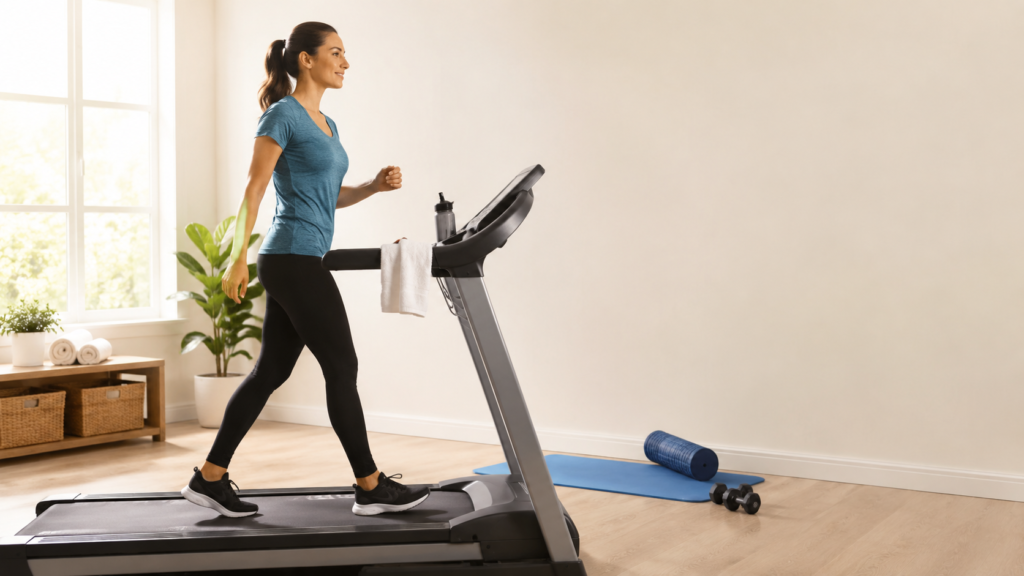
Starting a treadmill walking routine can be a simple and effective way to become more active, especially if you are new to exercise. A treadmill provides a controlled environment where you can adjust your walking speed, monitor your time, and exercise regardless of the weather.
You do not need to begin with long or difficult workouts. The goal is to create a routine that feels comfortable enough to repeat consistently. With the right approach, treadmill walking can become an enjoyable part of your weekly schedule.
Start With Realistic Goals
Before stepping onto the treadmill, decide what you want to achieve. Your goal might be to move more during the day, improve your fitness, build endurance, or establish a regular exercise habit.
As a beginner, avoid setting goals that require dramatic changes immediately. Starting with short sessions can make exercise feel more manageable and help you develop consistency.
For example, you might begin with 15 to 20 minutes of walking several days a week. As your fitness and confidence improve, you can gradually increase the duration.
Get Comfortable With the Treadmill
If you have never used a treadmill before, spend a few minutes becoming familiar with the controls. Learn how to start and stop the belt, adjust the speed, and use the emergency safety feature.
Wear comfortable clothing and supportive walking shoes. Keep the treadmill area clear of objects that could cause you to trip.
Begin at a very slow speed while you get used to the moving surface. There is no need to rush into a fast pace.
Begin With a Warm-Up
A warm-up prepares your body for activity and gives you time to settle into your workout.
Start by walking slowly for about five minutes. Gradually increase the speed until you reach a comfortable walking pace.
Your warm-up should feel easy. You should be able to speak without struggling for breath.
Choose a Comfortable Walking Pace
One of the most common mistakes beginners make is walking too fast too soon. Your starting pace should allow you to maintain good posture and comfortable breathing.
A useful guide is the talk test. If you can carry on a conversation while walking, you are generally exercising at a moderate level. If speaking becomes difficult, reduce the speed and allow yourself to recover.
There is no universal treadmill speed that every beginner should use. Your appropriate pace depends on your current fitness, age, health, and experience.
Focus on Good Walking Form
Good technique can make treadmill walking more comfortable.
Keep your head upright and look ahead rather than constantly looking down at your feet. Relax your shoulders and allow your arms to move naturally. Keep your steps comfortable instead of trying to make them unusually long.
Try not to hold onto the treadmill rails throughout the workout. Holding the rails can change your natural walking pattern and may reduce the challenge of the exercise. If you need the rails for balance or safety, use them as needed.
Keep Your First Workouts Short
Your first few treadmill sessions do not need to be intense. A short, comfortable workout can be enough to establish the habit.
One simple beginner session could look like this:
- 5 minutes of easy walking
- 10 minutes at a comfortable pace
- 5 minutes of slower walking to cool down
As this becomes easier, add a few minutes to the main walking period.
Increasing your activity gradually gives your body time to adapt.
Add Incline Carefully
Once you feel comfortable with regular treadmill walking, you can experiment with a small incline. Walking uphill increases the effort without necessarily requiring a much faster pace.
However, incline walking can place additional demands on your muscles and cardiovascular system. Start with a modest incline and see how your body responds.
There is no requirement to use incline settings. Flat walking is still valuable physical activity.
Create a Weekly Routine
Consistency matters more than having one extremely challenging workout.
For example, a beginner might schedule three walking sessions during the week, leaving rest or lighter-activity days between them.
As your endurance improves, you can gradually increase the length or frequency of your walks. You can also vary your workouts by changing your pace for short periods.
A simple progression could be:
Week 1: 15–20 minutes per session
Week 2: 20–25 minutes per session
Week 3: 25–30 minutes per session
Week 4: 30 minutes or more, depending on comfort
These are examples rather than strict requirements. Progress at a pace that feels appropriate for you.
Listen to Your Body
Mild tiredness after exercise can be normal, but pain should not be ignored. Stop exercising if you experience significant pain, dizziness, fainting, unusual shortness of breath, chest pain, or other concerning symptoms.
If you have a medical condition, are recovering from an injury, or have concerns about starting exercise, speak with a healthcare professional before beginning a new routine.
Rest is also part of progress. Your body needs time to recover, especially when you are increasing your activity level.
Make Walking More Enjoyable
A treadmill workout does not have to feel repetitive. You can listen to music, a podcast, or an audiobook while walking, provided it is safe to do so.
You can also create simple walking intervals. For example, walk comfortably for several minutes, increase the pace slightly for a short period, and then return to an easier pace.
Keep the focus on gradual improvement rather than trying to make every session difficult.
Final Thoughts
Starting a treadmill walking routine is about building a sustainable habit, not completing the hardest workout possible. Begin with a comfortable pace, warm up, pay attention to your walking form, and increase your activity gradually.
With regular practice, those first short walks can develop into longer and more confident workouts. The best routine is one that fits your lifestyle and feels realistic enough to continue.
This article is for general informational purposes and does not replace individualized medical advice. If you have health concerns or are unsure whether exercise is appropriate for you, consult a qualified healthcare professional.
very good submit, i certainly love this website, carry on it