
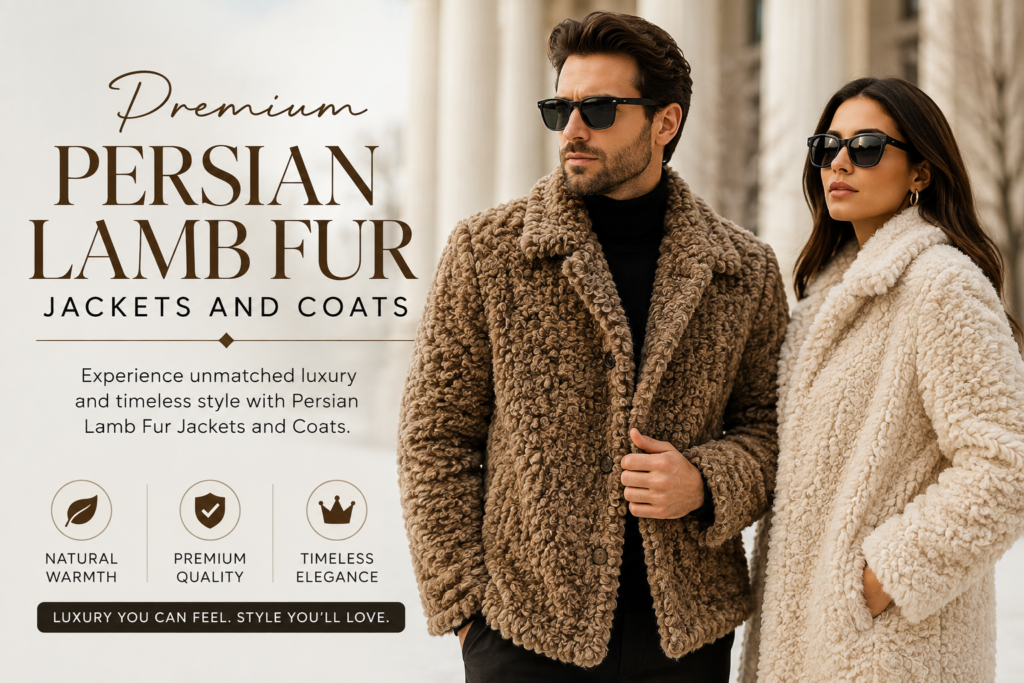
The Coat That Doesn’t Flinch at First Frost
There’s a morning every winter when the cold stops being a rumor.
You step outside, the air has teeth, and every thin layer you trusted in October quietly fails you. That is the moment a Persian lamb coat makes sense in a way no mood board ever could.
It isn’t loud. It doesn’t announce itself with logos or glossy trends. It simply sits on your shoulders, dense and warm, covered in tight, rippling curls that catch the streetlight like dark water.
Most style guides treat this coat as a fantasy. This one treats it as clothing, something you can wear to a Monday meeting, a Thursday dinner, and a long walk home in sleet. Think of it as a season-long field report on how to live in a Persian lamb fur coat, from the first frost to the deep freeze.
How Persian Lamb Fur Became a Global Favorite
The story begins far from any runway. Persian lamb, also known as karakul, comes from a breed of sheep raised in Central Asia, where winters are brutal and clothing has to earn its place.
That origin matters. This was never a decorative fabric. It was practical outerwear first, which explains why a persian fur coat feels so convincingly built for weather.
Over the decades, the look traveled. Tailors in Europe adopted it for collars and full-length coats. Film costume designers reached for it whenever a character needed to look worldly, wealthy, or quietly dangerous. Fashion followed the screen, as it usually does.
What keeps the style global is its range. The same texture reads as old-world elegance on one person and sharp, street-ready edge on another. Few materials can do both without trying.
The Rise of Persian Lamb Coats and Jackets
Here’s where the conversation gets modern.
For years, the lamb fur coat lived in a specific box, usually associated with grandparents, formal winters, and mothballed closets. Then younger shoppers started raiding family wardrobes and vintage racks, and the box cracked open.
A few things pushed the revival along:
- Vintage culture. A persian lamb coat, vintage or otherwise, offers something new pieces can’t: history in the lining.
- Texture fatigue. After seasons of smooth, minimal basics, people wanted surface, depth, and a little drama.
- Cold-weather realism. More shoppers are choosing outerwear that genuinely works rather than merely photographs well.
- Social feeds. Those tight curls look extraordinary on camera, especially in low winter light.
The result is a coat that feels simultaneously old and new, which is exactly where the best fashion tends to live.
Persian Lamb Styles Fans Love Most
Not every coat is built the same way. Here are the silhouettes people keep coming back to.
The Cropped Persian Lamb Jacket
A persian lamb jacket that stops at the hip is the easiest way in. It layers over knitwear, pairs with trousers or skirts, and doesn’t overwhelm a smaller frame. If you’re new to this fabric, start here.
The Full-Length Statement Coat
Knee-length or longer, with a wide collar and a heavy swing. This is the cinematic option, the one that looks incredible crossing a train platform at dusk.
The Men’s Persian Lamb Coat
A men’s persian lamb coat has an old-school gravitas that modern menswear is rediscovering. Tailored shoulders, a notch collar, and a slightly longer hem create a look that feels rich without effort. Pair it with a dark roll neck and leather boots, and you’re done.
The Collar-Only Compromise
Some coats use the fur only on the collar and cuffs, with wool or cloth for the body. It’s a subtle way to get the texture without committing to the full pelt.
The Short, Boxy Throw-On
Slightly cropped and relaxed, this is the version style editors reach for when they want something cool rather than formal.
How to Style a Persian Lamb Coat for Real Life
Styling advice should survive an actual commute. Here’s a framework that does.
Rule One: Let the Texture Be the Statement
The coat already has plenty to say. Keep what’s underneath simple: a fine knit, a crisp shirt, a clean tee.
Rule Two: Balance Weight With Sleekness
Heavy outerwear looks best against slim, streamlined shapes. Try:
- Straight or tapered trousers with a sleek boot
- A slip skirt with chunky socks and loafers
- Dark denim and a roll neck for a relaxed weekday uniform
Rule Three: Mind the Edges
A dense collar frames the face, so skip big scarves that fight for space. A thin silk scarf, or nothing at all, usually looks cleaner.
Rule Four: Choose Your Mood With Shoes
Polished boots make the coat feel formal. Sneakers make it feel unexpected. Both are valid.
Rule Five: Respect the Weather
A fur coat can handle cold, dry air beautifully. In heavy rain or wet snow, it’s wise to shake off moisture, hang it somewhere airy, and let it dry naturally, away from direct heat.
Oversized vs. Fitted Persian Lamb Coats
Both silhouettes have a devoted following.
Fitted
A fitted cut feels polished and decisive. It shows off your shape and works well for formal settings and evening plans. The trade-off is layering room, so test it with the thickest sweater you’d actually wear underneath.
Oversized
An oversized lamb fur jacket or coat feels borrowed from someone glamorous. It layers easily, moves with you, and has a casual confidence that suits daily wear.
A Simple Way to Decide
If your winters are mild and your plans are dressy, go fitted. If your winters are harsh and your days are long, go roomy. And if you can’t decide, a gently structured shoulder with a slightly relaxed body splits the difference nicely.
Best Colors and Materials for Persian Lamb Fashion
The Colors
- Black is the icon. It’s dramatic, versatile, and almost impossible to style badly.
- Deep brown adds warmth and a vintage feel.
- Charcoal and grey feel modern and understated.
- Cream or ivory is bold and editorial, though it asks for a bit more care.
The Terminology Worth Knowing
Shopping for these coats can feel like decoding a secret language, so here’s a quick glossary:
- Persian lambskin coat and persian lamb fur refer to the pelt of young karakul lambs, known for its tight, patterned curl.
- Persian lambswool coat and persian wool coat are often used loosely online. Strictly speaking, wool and fur are different materials, so check the product description to see what you’re actually buying.
- Mouton lamb coat and mouton lamb fur jacket describe processed sheepskin, treated so the fur lies flat and soft. It’s a different look from the curled texture of Persian lamb, but it’s also warm and often easier to maintain.
- Lambswool fur coat, lambs fur coat, and lamb fur coats are broader terms that cover several types of lamb-derived outerwear.
A Word on Faux
A faux persian lamb coat is a legitimate choice, not a lesser one. Modern textile work can replicate the curl pattern convincingly, and many shoppers prefer it for ethical reasons.
It’s also worth being honest about the other side of the conversation. The sourcing of real lamb fur is debated, and some people choose to avoid it entirely. If you buy real, look for brands that are transparent about where their materials come from. If you want the look without the question mark, faux or secondhand vintage is a thoughtful route.
Why Persian Lamb Coats Are Dominating 2026 Fashion
Three currents are meeting this winter.
First, there’s the appetite for texture. After years of flat, minimal dressing, fashion has swung toward tactile fabrics that look rich up close.
Second, there’s a hunger for durable pieces. A well-made coat can last for many winters, and that longevity feels more appealing as people grow wary of throwaway trends.
Third, there’s the rise of mixed-era dressing. Wearing something with history alongside modern basics has become a quiet signature of good taste.
Together, these shifts have turned the Persian lamb coat from a nostalgic curiosity into one of the more compelling outerwear choices of the season.
Care Notes for the Long Haul
A few habits keep the curl looking sharp:
- Store it on a wide, sturdy hanger in a breathable garment bag
- Avoid cramped closets that crush the pile
- Brush gently along the direction of the curl when needed
- Keep it away from radiators and direct heat
- Have it professionally cleaned by a specialist, not a standard dry cleaner
Treat it well, and it will repay you every winter.
Final Thoughts
The best coats aren’t the ones that win a single photograph. They’re the ones that make a freezing Tuesday feel a little more cinematic.
A Persian lamb coat does exactly that. It keeps you warm, gives your outfit a spine, and carries a sense of history without feeling like a museum piece.
If you’re ready to start looking, Jacket Craze is a good place to explore Persian lamb jackets and coats in different cuts, colors, and lengths, including options for those who want the look in a more modern, flexible form.
Frequently Asked Questions
What is a Persian lamb coat?
A Persian lamb coat is outerwear made from karakul lambskin, recognized for its tight, patterned curls and dense warmth. It’s often chosen for its distinctive texture and long-lasting wear.
Is a Persian lamb coat warm enough for harsh winters?
Yes. The dense pelt traps heat effectively, which is why the material has long been used in cold climates. Pair it with a good knit underneath, and it handles most winter conditions comfortably.
How do I care for a lamb fur coat?
Store it on a wide hanger in a breathable bag, keep it away from direct heat, let it dry naturally if it gets damp, and use a fur specialist for cleaning. Avoid plastic covers, which trap moisture.