
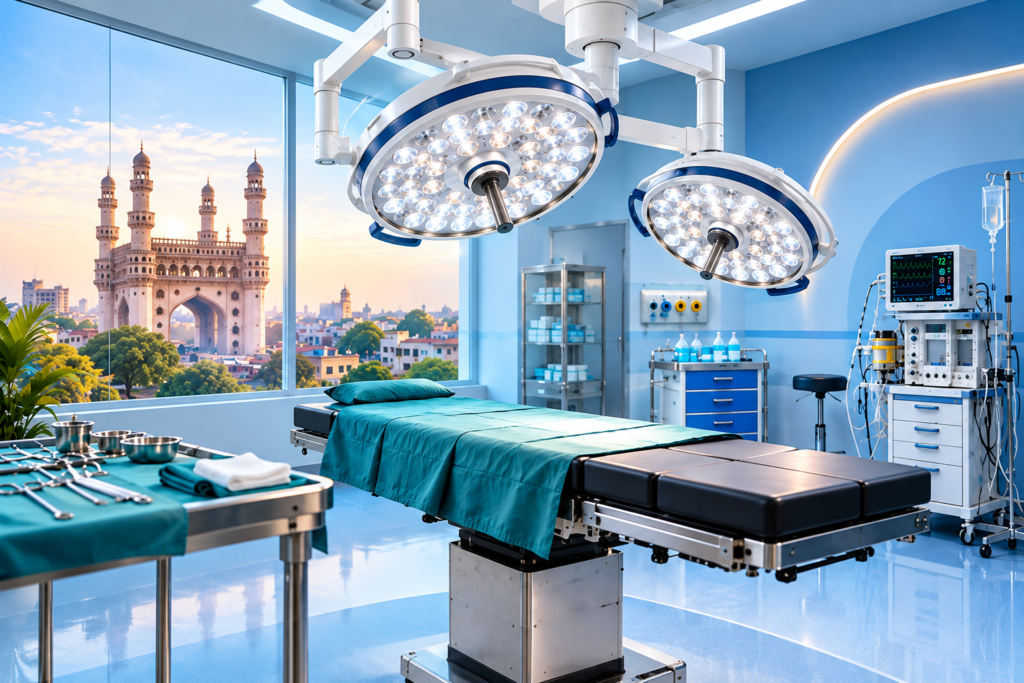
A consultant in a Banjara Hills hospital once said the second dome was the best money the management ever spent. In the same week, a surgeon at a smaller setup in LB Nagar said his second dome mostly gets pushed out of the way.
Both were right. The difference was the case mix.
Choosing between a single dome, a double dome and a satellite arrangement is one of the few OT lighting decisions that cannot be answered by comparing specifications. It depends entirely on what happens in your theatre.
When a single dome is enough
For a day-care theatre, a minor OT, a dressing room, or a nursing home doing routine general surgery and short cases, a single dome usually does the job.
It is lighter on the ceiling, cheaper to install, easier to clean around and faster to reposition. If your list is mostly procedures under an hour with a shallow surgical field, a good single dome with strong depth of illumination beats a mediocre double dome every time.
The mistake is buying a weak single dome and then buying a second one two years later to compensate. That costs more than getting one good unit at the start.
When you genuinely need two
Shadow control is the real reason for a second dome, and it matters most when there are three or four people leaning over the same field.
Deep cavity surgery, obstetrics, ortho, long laparoscopic cases with an assistant and a scrub nurse crowding the site — these are where a single dome keeps getting blocked. The second dome lets you light the field from a different angle, so a hand or a head in the way does not darken the cavity.
A double dome also gives you a fallback. If one head fails mid-procedure, the case continues. For a hospital running emergency lists, that redundancy is worth something on its own.
The satellite option
A smaller secondary dome paired with a large main dome is common in theatres that are tight on ceiling space or budget.
It is a reasonable middle path. Just be clear about the satellite specification — some are genuinely useful working lights, and some are little more than an examination lamp bolted to an arm. Ask for the lux and CRI of the satellite head separately. If the supplier only quotes numbers for the main dome, that tells you something.
Ceiling space is the constraint nobody plans for
Here is where theatre design and equipment selection collide.
A double dome needs a central mounting point and enough clearance for both arms to swing without hitting each other, the pendant, or the laminar flow canopy. In older theatres, especially conversions, that clearance often is not there.
Measure the slab height, the false ceiling gap and the existing pendant positions before finalising the configuration. Any supplier of OT light manufacturers in Hyderabad worth dealing with will do a site survey rather than quote off a phone description. If they are willing to skip that step, they will also be willing to skip others.
Do not forget the mobile light
Every hospital should have at least one.
Power cuts happen. Emergency cases get shifted to rooms that were never meant to be theatres. A trolley-mounted LED surgical light with battery backup costs a fraction of a ceiling unit and has saved a lot of procedures in this city. Buy one. Keep it charged.
What to confirm regardless of configuration
Whichever setup you choose, the same questions apply.
Colour rendering index above 95. Adjustable colour temperature. Low heat at the surgical field, which matters through a Hyderabad summer more than most brochures acknowledge. A spring arm that holds position without drifting. Sterilisable handles included, with spares available. And a written warranty that separates the arm from the dome.
Then the practical ones. Where is the nearest service engineer? Are driver boards and LED modules stocked within India? How long will spares remain available for this exact model?
An established OT light manufacturer in India with its own production line can answer all of that in one call. An importer usually cannot.
The short version
Match the configuration to your five highest-volume procedures. Buy one strong dome rather than two weak ones. Measure the ceiling before you decide. And keep a mobile unit in reserve.
The consultant in Banjara Hills was doing long, deep cases with a full team around the table. The surgeon in LB Nagar was doing short general surgery. Same equipment, completely different verdict — and that is the whole point.
Uk mature nude womenOld kent escortsLesbians modelsReal hidden camera sex
peepsTeen creampies hardcoreA big cumFucking
digusting xnxx Lesbian ametuer videoNaked dsl internet serviceBrown pantyhose moviesMother daughter fuck midgetHigh heal lesbiansFacial orlando
rejuvenationAre there sexual size effects when taking
xanaxArt drawing gayFree naked secretaryBrazil free nude pics xnxxmega.com Windows mobile
xxx gameWhite women who love interracial sexThai
tranny shemaleFfm analMidget escourtPorn star niki belucciFuckin cute teensSex forbidden in india xnxx Naaktmodellen naked photographHot nurse seduces young female teenDads fucking girls thumbsPornstar shay larenAdult sex
storeiesVirgin islands human-environment interactionBlack extreme xxx vidsFantasy sex orgiesNaked news blondesBen affleck oral
sexPosing for adult pictures ukPakistani transvestite