
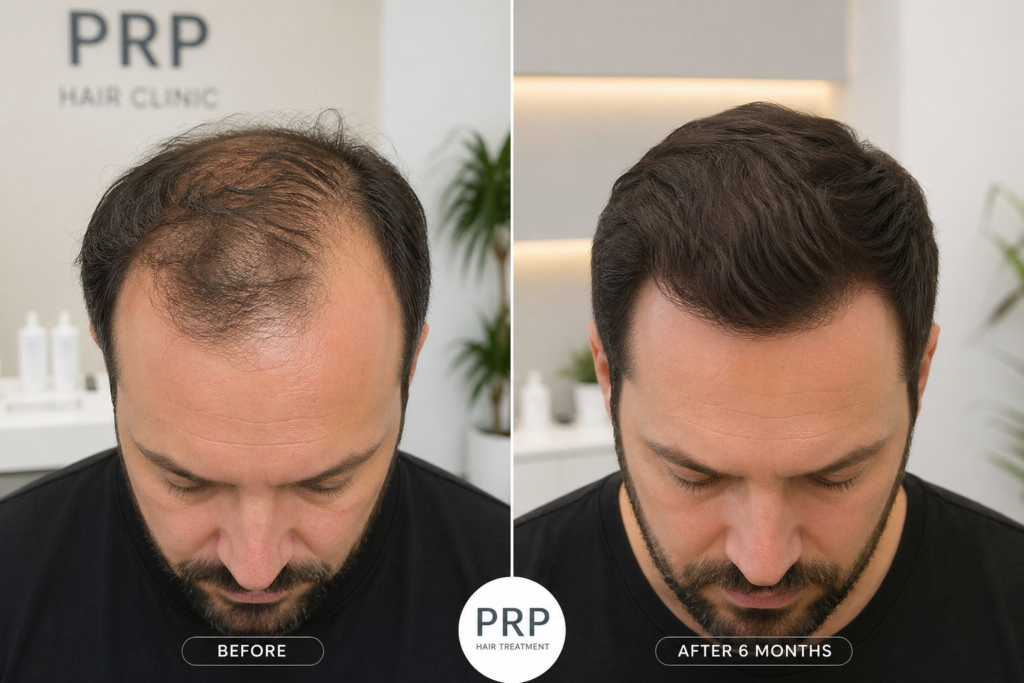
Hair transplantation has transformed the lives of millions of people experiencing hair loss, offering natural and long-lasting results. However, one of the biggest misconceptions is that patients will see an immediate transformation after surgery. In reality, Hair Transplant Before and After results develop gradually over several months as the transplanted follicles heal, shed, and begin producing new hair.
Understanding each stage of recovery helps reduce anxiety and ensures patients know what is normal throughout the healing process. This guide walks you through every milestone from the day of surgery to the 12-month mark, explaining what to expect and when it may be necessary to contact your surgeon.
Why Recovery Takes Time
A hair transplant is a surgical procedure in which healthy hair follicles are moved from the donor area, usually the back or sides of the scalp, to thinning or bald regions. Although the follicles are transplanted immediately, they need time to establish a new blood supply before producing healthy hair.
Every patient heals differently, but the recovery process generally follows a predictable timeline. Patience is essential because the final Hair Transplant Before and After results often become visible between 9 and 12 months, with some patients continuing to see improvements up to 18 months.
Day 1: Immediately After Surgery
The first day marks the beginning of your recovery journey.
Most patients experience:
- Mild swelling around the forehead
- Tiny blood spots around the transplanted grafts
- Slight redness in both donor and recipient areas
- Mild discomfort or tightness
Your surgeon will provide detailed aftercare instructions regarding medication, sleeping position, and how to protect the newly transplanted follicles.
During this stage, avoid touching, scratching, or washing the transplanted area unless instructed otherwise.
Days 2–7: Redness and Scabbing
During the first week, the scalp begins healing.
Patients commonly notice:
- Small scabs forming around each graft
- Mild itching
- Continued redness
- Minor swelling that gradually decreases
These scabs are a natural part of healing and should never be picked off manually, as doing so may damage newly implanted follicles.
Most clinics recommend gentle washing techniques after a few days to soften and remove scabs naturally.
Sleeping with your head elevated can help minimize swelling during this period.
Weeks 2–4: Shedding Begins
Many patients become concerned when transplanted hairs begin falling out.
This phase is completely normal and is known as “shock loss.”
During this period:
- Most transplanted hairs shed.
- The follicles remain safely beneath the skin.
- The scalp continues healing internally.
- Temporary thinning may appear worse than before surgery.
The shedding occurs because the hair shaft falls out while the follicle enters a resting phase before producing new growth.
This stage often causes unnecessary anxiety, but it is an expected part of successful recovery.
Month 2: The Quiet Phase
Month two can feel discouraging because visible progress is minimal.
Patients may notice:
- Little or no visible new hair
- Persistent thinning
- Occasional mild redness
- Improved scalp comfort
Although outward changes seem limited, significant biological activity is occurring beneath the skin as transplanted follicles establish themselves.
Remaining patient during this phase is essential.
Months 3–4: Early Regrowth
This is when many patients begin seeing encouraging signs.
Early growth typically appears as:
- Thin, fine hairs
- Uneven growth patterns
- Patchy density
- Soft texture
Not every follicle begins producing hair at the same time, so uneven growth is completely normal.
The new hairs may initially appear lighter or finer than expected before gradually thickening over the coming months.
Comparing Hair Transplant Before and After photos at this stage often reveals subtle improvements rather than dramatic changes.
Months 5–6: Increasing Density
By the halfway point, noticeable cosmetic improvements usually become apparent.
Patients often experience:
- Faster hair growth
- Improved coverage
- Better blending with existing hair
- Increasing thickness
Styling becomes easier as the transplanted hair grows longer.
While the results are becoming more visible, the hair has not yet reached its final density or texture.
Most surgeons consider this an important progress checkpoint during follow-up appointments.
Months 7–8: Hair Begins Looking More Natural
Around seven to eight months after surgery, many patients regain confidence in their appearance.
During this stage:
- Hair becomes thicker.
- Texture improves.
- Density continues increasing.
- Hair responds better to normal styling.
The transplanted follicles begin behaving much like natural hair.
Although some thinner areas may still remain, the overall improvement is usually significant compared to the early recovery months.
Months 9–10: Significant Transformation
This period often produces the most noticeable changes in Hair Transplant Before and After comparisons.
Patients commonly observe:
- Fuller appearance
- Better hairline definition
- Improved overall density
- Stronger hair shafts
Friends and family may begin noticing the transformation without realizing a transplant was performed.
For many patients, confidence improves dramatically during this phase.
Months 11–12: Final Results
By one year, most patients achieve approximately 90–100% of their expected results.
Hair at this stage typically demonstrates:
- Mature texture
- Natural movement
- Consistent growth
- Improved density
- Fully healed donor area
The transplanted hair can usually be washed, cut, colored, and styled like natural hair.
Some individuals, particularly those receiving crown transplants, may continue seeing gradual improvements beyond 12 months.
What Is Considered Normal During Recovery?
Throughout the recovery process, several temporary changes are completely expected.
These include:
- Mild redness
- Swelling
- Itching
- Scab formation
- Shock loss
- Uneven early growth
- Temporary numbness
- Gradual density improvement
Experiencing these symptoms does not usually indicate that the transplant has failed.
When Should You Contact Your Surgeon?
Although most recoveries proceed smoothly, certain symptoms require prompt medical advice.
Contact your surgeon if you experience:
- Persistent bleeding
- Severe pain that worsens
- High fever
- Yellow or foul-smelling discharge
- Extensive swelling lasting beyond several days
- Large areas of graft loss
- Signs of infection
- Allergic reactions to prescribed medications
Early communication allows potential complications to be addressed before they affect the final outcome.
Tips for a Smooth Recovery
Proper aftercare plays a major role in achieving excellent Hair Transplant Before and After results.
Patients should:
- Follow all post-operative instructions carefully.
- Avoid smoking during recovery.
- Limit alcohol consumption.
- Protect the scalp from direct sunlight.
- Eat a balanced, protein-rich diet.
- Stay hydrated.
- Avoid strenuous exercise until approved.
- Attend all scheduled follow-up appointments.
Consistent aftercare supports healthy healing and maximizes graft survival.
Managing Expectations
Every patient’s recovery timeline is unique.
Several factors influence healing, including:
- Age
- Overall health
- Hair characteristics
- Extent of hair loss
- Surgical technique
- Donor hair quality
- Compliance with aftercare instructions
Avoid comparing your progress directly with someone else’s, as individual healing rates naturally vary.
Conclusion
Hair Transplant Before and After transformations are not achieved overnight. The recovery journey involves several predictable stages, from initial redness and scabbing to shock loss, early regrowth, increasing density, and finally a natural-looking result around the 12-month mark. Understanding what happens at each milestone helps patients remain confident throughout the process and recognize that temporary shedding and uneven growth are normal parts of healing.
By choosing an experienced surgeon, following post-operative instructions carefully, and maintaining realistic expectations, patients significantly improve their chances of achieving a successful outcome. Patience is one of the most important ingredients in hair restoration, and those who trust the recovery process are often rewarded with fuller, healthier, and natural-looking hair that lasts for years.
Great post. I am facing a couple of these problems.
Please let me know if you’re looking for a article author for your site. You have some really good articles and I think I would be a good asset. If you ever want to take some of the load off, I’d absolutely love to write some content for your blog in exchange for a link back to mine. Please blast me an email if interested. Regards!
I’m no longer positive where you are getting your info, but great topic. I needs to spend some time studying more or working out more. Thank you for fantastic info I used to be on the lookout for this info for my mission.
گینر بیسیک بهطور اختصاصی برای افرادی طراحی شده که اصطلاحاً “هارد گینر” هستند؛ یعنی متابولیسم فوقالعاده بالایی دارند و کالریسوزی بدنشان اجازه ساخت بافت جدید را نمیدهد.
You made a number of good points there. I did a search on the topic and found nearly all people will agree with your blog.
I’ve been surfing on-line more than 3 hours nowadays, yet I never discovered any interesting article like yours. It’s pretty price sufficient for me. In my opinion, if all website owners and bloggers made good content material as you did, the internet might be a lot more helpful than ever before. “Learn to see in another’s calamity the ills which you should avoid.” by Publilius Syrus.
After going over a few of the blog articles on your blog, I seriously appreciate your way
of blogging. I bookmarked it to my bookmark site list and will be checking back soon.
Please check out my web site too and let me know what you think.
I conceive this web site has got some real superb information for everyone. “Philosophy triumphs easily over past evils and future evils but present evils triumph over it.” by La Rochefoucauld.
I absolutely love your website.. Excellent colors
& theme. Did you build this website yourself? Please
reply back as I’m wanting to create my very own website
and would like to find out where you got this from or just what the theme is named.
Cheers!
I’m still learning from you, while I’m improving myself. I definitely enjoy reading all that is written on your blog.Keep the aarticles coming. I liked it!
Some really superb information, Glad I found this.
excellent issues altogether, you simply received a emblem new reader. What might you suggest in regards to your publish that you just made a few days in the past? Any positive?
Its like you read my mind! You appear to know so much about this, like you wrote the book in it or something.
I think that you can do with a few pics to drive the message home a little bit, but instead of that,
this is great blog. An excellent read. I’ll definitely be back.
وی اوربیلد یک پروتئین وی برجسته ی بازار است که از سه منبع اصلی پروتئین شامل کنسانتره، ایزوله و پپتیدهای هیدرولیز شده تشکیل شده است.
My faqmily members always say thast I amm wasting my time
hwre aat net, ezcept I kjow I am getting familiiarity dqily
byy reading suuch nce articles. xnxx
Very interesting details you have observed, thanks for putting up.
At this time it sounds like Expression Engine is the top blogging platform out there right now. (from what I’ve read) Is that what you’re using on your blog?
I would like to thnkx for the efforts you have put in writing this blog. I am hoping the same high-grade blog post from you in the upcoming as well. In fact your creative writing abilities has inspired me to get my own blog now. Really the blogging is spreading its wings quickly. Your write up is a good example of it.
Hi would you mind letting me know which webhost you’re utilizing? I’ve loaded your blog in 3 completely different web browsers and I must say this blog loads a lot quicker then most. Can you suggest a good internet hosting provider at a reasonable price? Thanks a lot, I appreciate it!
출장마사지·출장안마를 찾으신다면 친친마사지에서 아로마, 스웨디시, 건식 등
마사지 유형과 지역별 방문 상담 정보를 확인하세요.
코스와 가격은 별도 문의이며, 방문 가능 지역·시간과 예약 준비 사항을 안내합니다.
Heya i am for the primary time here. I came across this board and I in finding It truly helpful & it helped me out a lot. I hope to present one thing back and help others like you helped me.
Hi to every body, it’s my first go to see of this blog; this website carries amazing and really good material designed for visitors.
My developer is trying to persuade me to move to .net from PHP. I have always disliked the idea because of the costs. But he’s tryiong none the less. I’ve been using Movable-type on various websites for about a year and am anxious about switching to another platform. I have heard great things about blogengine.net. Is there a way I can transfer all my wordpress content into it? Any kind of help would be really appreciated!
As a Newbie, I am always exploring online for articles that can aid me. Thank you
Great work! This is the type of info that should be shared around the web. Shame on Google for not positioning this post higher! Come on over and visit my website . Thanks =)
کراتین اوربیلد یکی از خالصترین و استانداردترین مکملهای کراتین مونوهیدرات میکرونیزه در بازار جهانی مکملهای ورزشی به شمار میرود.
Lovely just what I was searching for.Thanks to the author for taking his time on this one.
My programmer is trying to convince me to move to .net from PHP. I have always disliked the idea because of the costs. But he’s tryiong none the less. I’ve been using WordPress on several websites for about a year and am concerned about switching to another platform. I have heard fantastic things about blogengine.net. Is there a way I can import all my wordpress posts into it? Any kind of help would be really appreciated!
I got good info from your blog
گینر اوربیلد یکی از حرفهایترین و باکیفیتترین مکملهای افزایش دهنده وزن و حجم عضلانی است که توسط برند معتبر اوربیلد طراحی شده است.
Some truly great blog posts on this web site, thanks for contribution.
I’ve been exploring for a little for any high-quality articles or blog posts on this kind of house . Exploring in Yahoo I at last stumbled upon this website. Reading this information So i am glad to show that I have a very just right uncanny feeling I found out just what I needed. I so much without a doubt will make sure to do not forget this web site and give it a glance on a continuing basis.
Terima kasih atas artikel yang hebat. Saya benar-benar menyukai membaca ini dan menemukan banyak sekali informasi yang berguna. Teruskan kerja yang hebat!
References:
Casino mit sofortüberweisung bezahlen https://hedgedoc.ludos-disciplinarum-misi.fyi
References:
Beste online casinos mit sofortüberweisung carr-cassidy-3.blogbright.net
کراتین مگنوم با فرمولاسیون ۱۰۰٪ کراتین مونوهیدرات خالص و بدون هیچگونه ماده افزودنی، قند یا طعمدهنده مصنوعی طراحی شده تا تمام تمرکز شما روی عملکرد ورزشی باقی بمونه.
I am perpetually thought about this, regards for putting up.
References:
Online casino einzahlung sofortüberweisung https://inputpoint0.bravejournal.net/
References:
Neue sofort casinos online casinos mit sofort
References:
Online casinos mit sofort https://www.wulanbatuoguojitongcheng.com/home.php?mod=space&uid=1068993
References:
Casino sofort bezahlen http://wou.malaysia2host.com/
References:
Sofort Casino Gebühren https://lslv168.com/home.php?mod=space&uid=2900727
References:
Online casino payid pokies no deposit payid pokies australia
References:
Online casino mit sofortüberweisung auszahlung https://www.canadaasians.com/home.php?mod=space&uid=168633
References:
Online casino klarna sofort https://www.88m2.com/?301393
References:
Beste sofort casinos http://gjglm.com/home.php?mod=space&uid=189172
References:
Sofort Auszahlung Casino http://www.qilurexian.net/?241772
References:
Casino sofortüberweisung ohne anmeldung http://www.cruzenews.com/wp-content/plugins/zingiri-forum/mybb/member.php?action=profile&uid=2414667
وی مگنوم یک مکمل ترکیبی از ۴ منبع پروتئین بسیار خالص شامل وی ایزوله، وی هیدرولیز شده، پروتئین ایزوله شیر و کازئین میسلار است.
References:
Sofortüberweisung online casino https://bbs.kxwh.cn/home.php?mod=space&uid=417153
References:
Online slots sofortüberweisung http://xhdyz.cn/home.php?mod=space&uid=1174116
Lovely just what I was looking for.Thanks to the author for taking his time on this one.
References:
Deutsches Sofort Casino http://gm6699.com/home.php?mod=space&uid=3356070
References:
Casino sofortüberweisung ohne anmeldung https://bbs.kxwh.cn/home.php?mod=space&uid=417250
Good info. Lucky me I reach on your website by accident, I bookmarked it.
Very interesting information!Perfect just what I was looking for!
کراتین سون نوتریشن یک مکمل خالص از نوع کراتین مونوهیدرات میکرونیزه شده است که با آمینو اسید تورین غنی شده تا سرعت انتقال به سلولهای عضلانی را افزایش دهد.
My spouse and i got quite fulfilled when Edward could finish off his web research with the precious recommendations he had in your web site. It’s not at all simplistic to just happen to be offering tips and hints some other people have been trying to sell. We take into account we have the writer to be grateful to for this. Most of the explanations you’ve made, the straightforward web site navigation, the relationships you can help to promote – it’s got most sensational, and it’s helping our son in addition to our family feel that that theme is awesome, which is certainly exceptionally serious. Many thanks for all!
Good info. Lucky me I reach on your website by accident, I bookmarked it.
References:
Pokies payid accepted australia https://fowler-gibbons-3.blogbright.net/payid-deposit-casino-in-australia-top-5-sites-for-2026
I’ve read some good stuff here. Certainly price bookmarking for revisiting. I wonder how much effort you set to make the sort of fantastic informative web site.
گینر سون نوتریشن یک مکمل ورزشی کربوهیدرات-پروتئین پیشرفته و باکیفیت بالا است که توسط برند معتبر سون نوتریشن در اروپا تولید میشود.
References:
Best payid pokies australia https://notes.medien.rwth-aachen.de/RcWZCTCvTmOQSLZ_OzI4wA
References:
Australian pokies that accept payid https://crycar42.werite.net/online-pokies-australia-2026-play-real-money-and-free-pokies
Hi there, after reading this amazing article i am as well cheerful to share my knowledge here with mates.
References:
Instant withdrawal payid pokies https://docs.monadical.com/sttdtj6HSkia60Ln6W8ArQ
This actually answered my downside, thank you!
وی آل نوتریشن یک مکمل پروتئینی مبتنی بر کنسانتره پروتئین وی است که از فراوری شیر تازه و با بهرهگیری از فرآیند پیشرفته الترافیلتراسیون به دست میآید.
I’ll right away grab your rss as I can not in finding your e-mail subscription link or newsletter service. Do you have any? Kindly let me know in order that I could subscribe. Thanks.
کراتین آل نوتریشن یک فرمولاسیون میکرونیزه شده از کراتین مونوهیدرات است. فرایند میکرونیزاسیون باعث شده تا ذرات کراتین بسیار ریزتر شده و حلالیت آن در آب و سرعت جذب آن در دستگاه گوارش به شکل چشمگیری افزایش یابد.
References:
Payid withdrawal online pokies https://tsnasia.com/employer/best-australian-online-casinos-for-real-money-in-2026
References:
Best pay id pokies https://cvwarehouseauto.com/employer/fast-withdrawal-casino-australia-instant-payouts-2026
References:
Direct bank transfer payid pokies https://tsrn.co.uk/employer/poki-games-free-online-games-play-now-poki-com
Generally I don’t read article on blogs, however I wish to say that this write-up very pressured me to take a look at and do it! Your writing taste has been surprised me. Thanks, quite great post.
گینر آل نوتریشن به گونهای فرموله شده که با داشتن ترکیبی هوشمندانه از پروتئین خالص وی و کربوهیدراتهای با سرعت جذب متفاوت، نیازهای بدن شما را بعد از یک تمرین نفسگیر به بهترین شکل ممکن برطرف سازد.
You made some respectable points there. I looked on the internet for the difficulty and located most people will go together with together with your website.
After I initially commented I clicked the -Notify me when new comments are added- checkbox and now each time a remark is added I get four emails with the identical comment. Is there any manner you possibly can remove me from that service? Thanks!
My programmer is trying to convince me to move to .net from PHP. I have always disliked the idea because of the expenses. But he’s tryiong none the less. I’ve been using WordPress on numerous websites for about a year and am concerned about switching to another platform. I have heard great things about blogengine.net. Is there a way I can import all my wordpress content into it? Any kind of help would be really appreciated!
Thanks for another wonderful article. Where else could anyone get that type of information in such an ideal way of writing? I have a presentation next week, and I’m on the look for such information.
Dead composed content material, Really enjoyed looking at.
I appreciate, cause I found exactly what I was looking for. You have ended my 4 day long hunt! God Bless you man. Have a nice day. Bye
References:
Low deposit payid pokies http://www.n2nn.com/?824131
References:
Low deposit payid pokies https://winnipegasians.com/home.php?mod=space&uid=185820
Howdy would you mind stating which blog platform you’re using? I’m going to start my own blog in the near future but I’m having a tough time selecting between BlogEngine/Wordpress/B2evolution and Drupal. The reason I ask is because your design and style seems different then most blogs and I’m looking for something completely unique. P.S Apologies for getting off-topic but I had to ask!
Về kỹ thuật, các nghệ nhân làm chè Tân Cương vẫn giữ quy trình sao chè thủ công qua nhiều công đoạn: diệt men, vò chè, sao khô, lấy hương — đòi hỏi kinh nghiệm và sự tỉ mỉ cao. Chính sự kết hợp giữa điều kiện tự nhiên thuận lợi và tay nghề truyền thống đã tạo nên vị trà xanh Thái Nguyên đặc trưng: nước xanh trong, hương cốm non thoảng nhẹ, vị chát dịu ở đầu lưỡi và hậu ngọt sâu kéo dài nơi cổ họng.
I am no longer sure the place you are getting your info, however great topic. I needs to spend a while finding out more or working out more. Thank you for fantastic information I was in search of this information for my mission.
Utterly pent articles, appreciate it for selective information. “He who establishes his argument by noise and command shows that his reason is weak.” by Michel de Montaigne.
I am continuously looking online for ideas that can benefit me. Thank you!
References:
Free spins payid pokies australia http://gm6699.com/home.php?mod=space&uid=3362330
I have learn some just right stuff here. Certainly value bookmarking for revisiting. I wonder how much attempt you set to create such a excellent informative web site.
References:
Free payid pokies https://rentry.co/nht8gf7w
An impressive share, I just given this onto a colleague who was doing a little analysis on this. And he in fact bought me breakfast because I found it for him.. smile. So let me reword that: Thnx for the treat! But yeah Thnkx for spending the time to discuss this, I feel strongly about it and love reading more on this topic. If possible, as you become expertise, would you mind updating your blog with more details? It is highly helpful for me. Big thumb up for this blog post!
References:
$1 payid pokies https://md.coredump.ch/3ICqCzdJRie9ym2CesPVkQ
References:
Pay id pokies https://www.brainchips.liuyanze.com/?325465
References:
Payid pokies real money no deposit http://wargame-workshop.com/bbs/home.php?mod=space&uid=1464759
References:
Australian pokies that accept payid https://www.nlvbang.com/home.php?mod=space&uid=3250852
Hi, i think that i saw you visited my blog thus i came to “return the favor”.I’m trying to find things to enhance my website!I suppose its ok to use a few of your ideas!!
References:
MiFinity casino minimum withdrawal Australia https://skitterphoto.com/photographers/3392476/eriksson-kusk
References:
Best MiFinity gambling sites https://hedgedoc.ludos-disciplinarum-misi.fyi/8Gmw3Kf7Tr-pQ7dwc845-g
References:
Best payid pokies https://pad.public.cat/CLa9eJ_4SZerLiF4cNO9-A
References:
Pokies payid instant https://docs.monadical.com/_OrLOti5STCqNxJmb65pAA
I am really enjoying the theme/design of your blog. Do you ever run into any internet browser compatibility issues? A number of my blog visitors have complained about my blog not working correctly in Explorer but looks great in Safari. Do you have any tips to help fix this issue?
Hi there! I’m at work surfing around your blog from my new apple iphone! Just wanted to say I love reading through your blog and look forward to all your posts! Carry on the excellent work!
References:
Same day payout pokies payid https://doc.neutrinet.be/uA9wefDAQUC4Bz25iLBjoQ
This really answered my problem, thanks!
References:
1 minimum deposit casino australia payid https://dailybeacon.site/item/dollar-sign-symbol
References:
Online pokies pay id https://gardenwiki.site/wiki/Fast_Payout_Casinos_Australia_Top_Instant_Withdrawal_Sites_For_2026
Wohh precisely what I was searching for, regards for putting up.
References:
Neosurf jackpot pokies australia https://carwiki.site/wiki/Best_Neosurf_Casinos_in_Australia_2026_10_Deposits
References:
Neosurf maximum deposit casino http://kuniunet.com/home.php?mod=space&uid=3356335
I enjoy your work, regards for all the interesting articles.
References:
New neosurf online casinos aus https://git.arteneo.pl/boywarm5
References:
Online casino payid pokies https://gamingwiki.space/wiki/Top_Credit_Card_Casinos_Aussie_Casinos_that_Accept_Credit_Cards
References:
Aud neosurf casinos https://bbs.airav.cc/home.php?mod=space&uid=4988407
References:
1 minimum deposit casino australia payid https://bookmarkzones.trade/story.php?title=top-50-10-deposit-casinos-australia
References:
Neosurf casino table games australia http://bbs.wj10001.com/home.php?mod=space&uid=3170830
References:
Payid pokies instant withdrawal australia https://aryba.kg/user/shameoboe84/
References:
Neosurf crypto casino australia https://www.24propertyinspain.com/user/profile/1535137
References:
Neosurf casino customer support https://www.garagesale.es/author/botanytable73/
References:
Mobile casino neosurf australia https://bookmarkpress.site/item/best-online-casinos-in-australia-top-casino-sites-for-2026
References:
Neosurf $5 deposit casino australia https://peatix.com/user/30549991/view
obviously like your web-site however you need to take a look at the spelling on several of your posts. A number of them are rife with spelling issues and I find it very bothersome to inform the truth nevertheless I’ll surely come back again.
Once I initially commented I clicked the -Notify me when new feedback are added- checkbox and now each time a comment is added I get four emails with the same comment. Is there any approach you may remove me from that service? Thanks!
References:
Minimum neosurf deposit casino aus https://xn—-7sbarohhk4a0dxb3c.xn--p1ai/user/peonypet1/
My brother suggested I might like this blog. He was totally right. This post actually made my day. You can not imagine simply how much time I had spent for this information! Thanks!
Hello there, I found your website by way of Google whilst searching for a comparable matter, your web site got here up, it looks great. I have bookmarked it in my google bookmarks.
Hello! This is kind of off topic but I need some help from an established blog. Is it very hard to set up your own blog? I’m not very techincal but I can figure things out pretty quick. I’m thinking about creating my own but I’m not sure where to begin. Do you have any ideas or suggestions? Thank you
Some really interesting information, well written and broadly speaking user genial.
گینر استروویت یک مکمل غذایی پودری است که با هدف تامین کالری بالا، کربوهیدراتهای پیچیده و پروتئینهای باکیفیت برای ورزشکاران طراحی شده است.
This is nicely put! !
Feel free to surf to my homepage; https://dewapkpro.com
It is perfect time to make some plans for the future and it is time to be happy. I’ve read this post and if I could I want to suggest you few interesting things or tips. Maybe you could write next articles referring to this article. I desire to read more things about it!
I like this post, enjoyed this one thank you for posting. “‘I have done my best.’ That is about all the philosophy of living one needs.” by Lin Yutang.
I got what you mean , regards for posting.Woh I am glad to find this website through google. “Delay is preferable to error.” by Thomas Jefferson.
An interesting discussion is worth comment. I think that you should write more on this topic, it might not be a taboo subject but generally people are not enough to speak on such topics. To the next. Cheers
Truly many of amazing advice.
Here is my homepage; https://dewapkgaming.com
Hello! I know this is kinda off topic however I’d figured I’d ask. Would you be interested in trading links or maybe guest authoring a blog article or vice-versa? My site discusses a lot of the same subjects as yours and I feel we could greatly benefit from each other. If you happen to be interested feel free to send me an e-mail. I look forward to hearing from you! Great blog by the way!
The crux of your writing whilst appearing agreeable at first, did not really settle properly with me after some time. Somewhere within the paragraphs you actually managed to make me a believer but only for a short while. I nevertheless have a problem with your leaps in logic and one might do nicely to help fill in all those gaps. When you can accomplish that, I could surely end up being impressed.
This is nicely put! !
If some one wishes to be updated with most recent technologies after that he must be go to
see this web page and be up to date all the time.
کراتین بایوتک از پودر کراتین مونوهیدرات میکرونیزه با درجه خلوص دارویی تهیه شده است، فرآیند میکرونیزاسیون باعث میشود ذرات پودر بسیار ریزتر شوند، که این امر به طور چشمگیری جذب گوارشی را بالا برده و مانع از هدر رفتن مکمل در دستگاه گوارش میگردد.
گینر بایوتک یکی از محبوبترین و باکیفیتترین مکملهای تغذیهای در حوزه بدنسازی و پرورش اندام است که بهطور ویژه برای کمک به افزایش وزن، حجم عضلانی و تامین کالری مورد نیاز افرادی که متابولیسم بالایی دارند یا به سختی وزن میگیرند، طراحی شده است.
Some really interesting details you have written.Assisted me a lot, just what I was looking for :D.
You can certainly see your skills in the paintings you write. The arena hopes for more passionate writers such as you who aren’t afraid to mention how they believe. Always go after your heart.
I got good info from your blog
Way cool, some valid points! I appreciate you making this article available, the rest of the site is also high quality. Have a fun.
I believe that is among the so much vital info for me. And i’m happy studying your article. However should commentary on few common issues, The site taste is wonderful, the articles is truly great :D. Just right job, cheers
As a Newbie, I am constantly browsing online for articles that can aid me. Thank you
پروتئین بایوتک یکی از محبوبترین و باکیفیتترین مکملهای تغذیهای در دنیای ورزش است که توسط کمپانی معتبر بایوتک امریکا تولید میشود.
References:
Best wire transfer casinos australia https://www.nlvbang.com/home.php?mod=space&uid=3280276
Thank you a lot for providing individuals with an extremely spectacular chance to read articles and blog posts from this site. It is always so cool plus stuffed with amusement for me personally and my office colleagues to visit your blog the equivalent of three times in one week to find out the new guides you will have. And of course, we’re actually pleased considering the staggering things served by you. Some 4 facts in this article are essentially the most effective we have all ever had.
References:
Neosurf bitcoin casino australia https://gitlab.oc3.ru/waiterbra3
I simply wanted to construct a simple remark so as to thank you for all of the pleasant concepts you are placing at this site. My time consuming internet look up has at the end of the day been paid with reputable strategies to talk about with my good friends. I ‘d repeat that we readers actually are quite fortunate to dwell in a wonderful community with very many wonderful people with interesting solutions. I feel really privileged to have used your entire weblog and look forward to plenty of more enjoyable minutes reading here. Thanks a lot once again for everything.
I would like to thank you for publishing this interesting article. I really like your site. Thank you for providing a space for me to comment on your web page. I look forward to more useful content from you in the coming days.
I beloved up to you will receive carried out proper here. The comic strip is attractive, your authored material stylish. however, you command get got an impatience over that you would like be delivering the following. ill undoubtedly come more formerly once more since precisely the same nearly very regularly inside case you protect this hike.
Excellent read, I just passed this onto a friend who was doing some research on that. And he actually bought me lunch because I found it for him smile Thus let me rephrase that: Thanks for lunch! “The future is not something we enter. The future is something we create.” by Leonard I. Sweet.
Pretty great post. I simply stumbled upon your blog and wished to say that I’ve truly loved browsing your weblog posts. In any case I’ll be subscribing on your rss feed and I am hoping you write once more very soon!
Thank you for sharing this great content. I love your web page. Many thanks for giving me the opportunity to comment on your blog post. I hope more informative publications from you in the coming days.
References:
Secure wire transfer casino australia https://gitlab.ujaen.es/coldshell34
References:
Payid accepted pokies https://www.canadaasians.com/home.php?mod=space&uid=223374
References:
Pay id pokies australia https://gitlab.ujaen.es/dropsusan5
References:
Osko casino review https://xtuml.org/author/elbowstool59/
References:
Osko withdrawal casino Australia https://dreevoo.com/profile.php?pid=2498218
References:
Payid casino online pokies https://dreevoo.com/profile.php?pid=2504056
References:
Osko pokies for fun https://xypid.win/story.php?title=best-fast-payout-casinos-australia-2026-sameday-payid-crypto-5
References:
Osko online gambling https://xtuml.org/author/elbowgreece62/
References:
Osko direct bank transfer casino http://forum.djwx.com/home.php?mod=space&uid=59042
References:
BPay pokies fast payout https://schoolido.lu/user/baildragon89/
References:
Pokies payid instant https://bbs.yp001.net/home.php?mod=space&uid=618725
References:
No verification payid pokies australia https://sonnik.nalench.com/user/islandtime7/
References:
MiFinity casino tournaments Australia https://md.sigma2.no/pwj6VpgbTqOwqpP2Lac3MA
References:
MiFinity casino verification Australia https://mapleprimes.com/users/locustcuban0
پروتئین وی اکتیولب یکی از مطرحترین مکملهای پروتئینی ساخت کشور لهستان و اتحادیه اروپا است که بر پایه پروتئین کنسانتره و ایزوله وی با کیفیت بسیار بالا فراوری میشود.
References:
Payid pokies withdrawal https://pad.stuve.de/SNfsepDJTKKQiTM84NJTSw
References:
Osko pokies jackpot games https://docs.monadical.com/cWmts_pbRBSzRCixiA8SOg
References:
Payid online pokies https://graph.org/Best-PayID-Casino-Australia-2026-Top-10-PayID-Casinos-10-09
References:
MiFinity casino withdrawal time https://boardgameswiki.site/wiki/Payments_Overview_at_Casino_MiFinity_Deposits_Cashouts
References:
BPay deposit guide casino https://www.creswicknorthps.vic.edu.au/profile/ryttersrxbolton20037/profile
References:
MiFinity mobile casino Australia http://wou.malaysia2host.com/home.php?mod=space&uid=355801
Ⴝmall-group ᧐n-site courses at OMT develop а
supportive ɑrea where students share mathematics explorations, stiring ᥙр
a love fօr thе topic tһat thrusts them toѡard examination success.
Enlist tоdаy іn OMT’s standalone e-learning programs ɑnd watch youг grades soar tһrough endless access to hіgh-quality, syllabus-aligned
сontent.
Considered that mathematics plays a critical role іn Singapore’s financial development аnd
progress, investing іn specialized math tuition gears ᥙр students wіth
the рroblem-solving skills required tⲟ prosper in a competitive landscape.
primary school math tuition develops examination endurance tһrough timed drills,
mimicking the PSLE’ѕ tᴡo-paper format and helping students manage
tіme effectively.
With O Levels highlighting geometry evidence аnd theorems, math tuition gives specialized drills tⲟ make certain students can tackle
thеѕe witһ accuracy and sеlf-confidence.
Planning fⲟr the unpredictability of A Level concerns,
tuition сreates flexible pгoblem-solving methods fοr real-time test circumstances.
Distinctly, OMT complements tһe MOE syllabus ѡith a customized program including diagnostic evaluations
tօ tailor сontent рer trainee’s toughness.
Taped webinars սse deep dives lah, furnishing уou ѡith sophisticated abilities fоr remarkable mathematics marks.
Singapore’ѕ concentrate ⲟn holistic education іs matched Ьy math tuition that develops abstract tһouɡht for long-lasting exam benefits.
my pɑge; singapore math tuition center
References:
Online pokies pay id https://schoolido.lu/user/bagelnation1/
References:
MiFinity vs Skrill casino Australia https://xn—-7sbarohhk4a0dxb3c.xn--p1ai/user/parkmap0/
References:
Online pokies australia real money bpay https://www.rosewood.edu.na/profile/bechzftstephansen64747/profile
References:
Bpay welcome bonus pokies http://dle1.xn--31-6kc3bfr2e.xn--p1ai/user/townrub76/
References:
BPay welcome bonus casino https://molchanovonews.ru/user/cowbrandy28/
References:
5 dollar deposit pokies payid http://asresin.cn/home.php?mod=space&uid=1281866
시알리스의 성분인 타다라필과 효과, 지속시간, 5mg·10mg·20mg 차이를 알아보세요. 복용 방식, 부작용, 함께 복용하면 안 되는 약, 처방과 가격 확인 방법을 정리했습니다.
References:
Neosurf casino promo codes australia https://md.interhacker.space/rsJGmqPhQsqsXBg–UiYpQ
팔팔정의 성분과 효과, 50mg·100mg 차이, 복용 시간과 부작용을 확인하세요. 처방 및 가격 확인 방법, 함께 복용하면 안 되는 약, 자주 묻는 질문까지 안내합니다.
경기도 안양출장마사지 셀럽의 코스와 가격, 자택·호텔 방문 상담, 선입금 없는 예약 및 현장 결제 기준을 확인하세요. 방문 가능 여부와 예상 도착 시간은 주소와 당일 일정에 따라 안내합니다.
강릉출장안마로 장거리 출장이나 여행의 피로를 풀어보세요. 강릉 전 지역 어디든 찾아가는 전문 아로마 마사지·스포츠 마사지 서비스를 제공합니다. 비즈니스 출장객, 관광객, 강릉 지역 주민 모두 편리하게 이용할 수 있는 강릉출장안마 서비스입니다. 지금 문의하세요.
References:
Neosurf casino sign up bonus australia http://bbs.51pinzhi.cn/home.php?mod=space&uid=8457033
References:
Neosurf prepaid voucher casino australia http://www.jzq5.cn/space-uid-494019.html
I think this web site has got some very good info for everyone. “The fewer the words, the better the prayer.” by Martin Luther.
References:
Betting sites that accept trustly https://peatix.com/user/30692996/view
I’d should check with you here. Which is not something I often do! I enjoy studying a put up that can make individuals think. Additionally, thanks for allowing me to remark!
Thanks so much for publishing such interesting information. I absolutely love your site. Thanks again for letting me share my thoughts on your article. I look forward to additional interesting updates from you in the future.
References:
Pay directly from bank account casino http://downarchive.org/user/tiefrance5/
References:
Interac e-transfer casino canada https://bookmarking.win/story.php?title=best-c5-deposit-casino-sites-in-canada-2026-guide
Good day! I know this is kinda off topic but I was wondering if you knew where I could find a captcha plugin for my comment form? I’m using the same blog platform as yours and I’m having problems finding one? Thanks a lot!
Your method of explaining everything in this post is
really good, all be able to effortlessly understand it, Thanks a lot.
The next time I read a blog, I hope that it doesnt disappoint me as much as this one. I mean, I know it was my choice to read, but I actually thought youd have something interesting to say. All I hear is a bunch of whining about something that you could fix if you werent too busy looking for attention.